
EOTs
Employee ownership trusts
An Employee Ownership Trust, or EOT, is a structure that buys your business on behalf of your employees and holds it in trust for their benefit. You exit. The company keeps its name, its culture, and its people. And ownership passes to the team who helped build it, without them needing to find the cash to buy you out personally.
EOTs have been used in the UK for years. In Canada, they became possible only in 2024, which makes this one of the newest and most talked-about succession options available to Canadian owners, and one of the least understood. That’s where we come in.
Your Life’s Work is in Good Hands

The Problem
Most business owners reach a point where they start thinking about what comes next. Retirement, a change of pace, or simply the question of who will carry the business forward. In fact, more than 70% of Canadian small business owners plan to retire within the next decade.
But the usual options can feel like a poor fit. Selling to a competitor often means the business loses its name, its culture, and the team that made it work. Private equity can bring pressure to cut and flip. And handing things to the next generation isn’t always possible. For many owners, the hardest part isn’t deciding to leave. It’s leaving without undoing everything they built.
Employee Ownership Trusts as a Solution
What is an EOT?
Why Choose an EOT - Key Benefits
A succession route that protects your legacy.
- An exit that isn’t a sale to a competitor or private equity firm
- Business continuity, with your team, brand, and clients intact
- A meaningful ownership stake for the employees who built the company
- A powerful tool to attract, retain, and reward your people, not just an exit
A significant and now permanent tax advantage.
Selling to an EOT comes with one of the most generous incentives in Canadian succession planning: the first $10 million in capital gains on a qualifying sale to an EOT can be exempt from tax. Originally introduced as a temporary measure, this exemption was made permanent in the federal government’s Spring 2026 update, giving owners real long-term certainty when planning an exit.
The benefits don’t stop there. An EOT sale also allows capital gains to be spread over a 10-year reserve period rather than the usual five, and lets the company finance the purchase through a shareholder loan over as long as 15 years, making it realistic to transition ownership to your team without them paying out of pocket. The rules carry conditions, and qualifying matters. That’s exactly the kind of detail we handle with you.
How Does an EOT Work?
- The trust is established. A Canadian-resident Employee Ownership Trust is created to hold shares on behalf of your employees.
- The trust buys your business. It acquires a controlling interest in your company, typically funded over time out of future profits, plus bank and vendor financing.
- You are paid out. Proceeds are paid as the business performs, with the option to spread gains over an extended reserve period.
- Employees benefit. Your employees become beneficiaries of the trust, sharing in the company’s success, without writing personal cheques to buy in.
Throughout, the company keeps running as it always has. The structure is designed so the transition is gradual and sustainable, not a disruptive sale.
Is an EOT Right for Your Business?
An EOT tends to be a strong fit when:
- You’re thinking about retirement or succession, now or within the next several years
- You don’t want to sell to a competitor or private equity
- You want your team to share in what they helped build
- Your business has stable, predictable cash flow to support the transition
Many established, profitable Canadian companies are well-suited to this model. The best way to know whether it fits yours is a conversation, which is exactly what we’re here for.
Your Legacy, Your Way
At Ownership Design Group, we understand that every business is unique, and believe your succession plan should be too.
It’s Always the Right Time to Connect
Whether you are in the early stages of exploration or ready to start, let’s begin the conversation.
How We’ll Work Together – Your Step by Step
From Initial Conversation to Long-Term Stewardship
Discovery Call
We start with a no-obligation
conversation to understand
your business, your goals, and
your timeline. No jargon. No
pressure.
Structure Design
We assess your options —
EOT, ESOP, or MBO — and
recommend a structure
tailored to your values,
financial goals, and
employees.
Collaborative Planning
We stay with you through
closing and into governance —
offering ongoing coaching for
employee-owned companies
after the deal.
Transition & Beyond
We stay with you through
closing and into governance —
offering ongoing coaching for
employee-owned companies
after the deal.
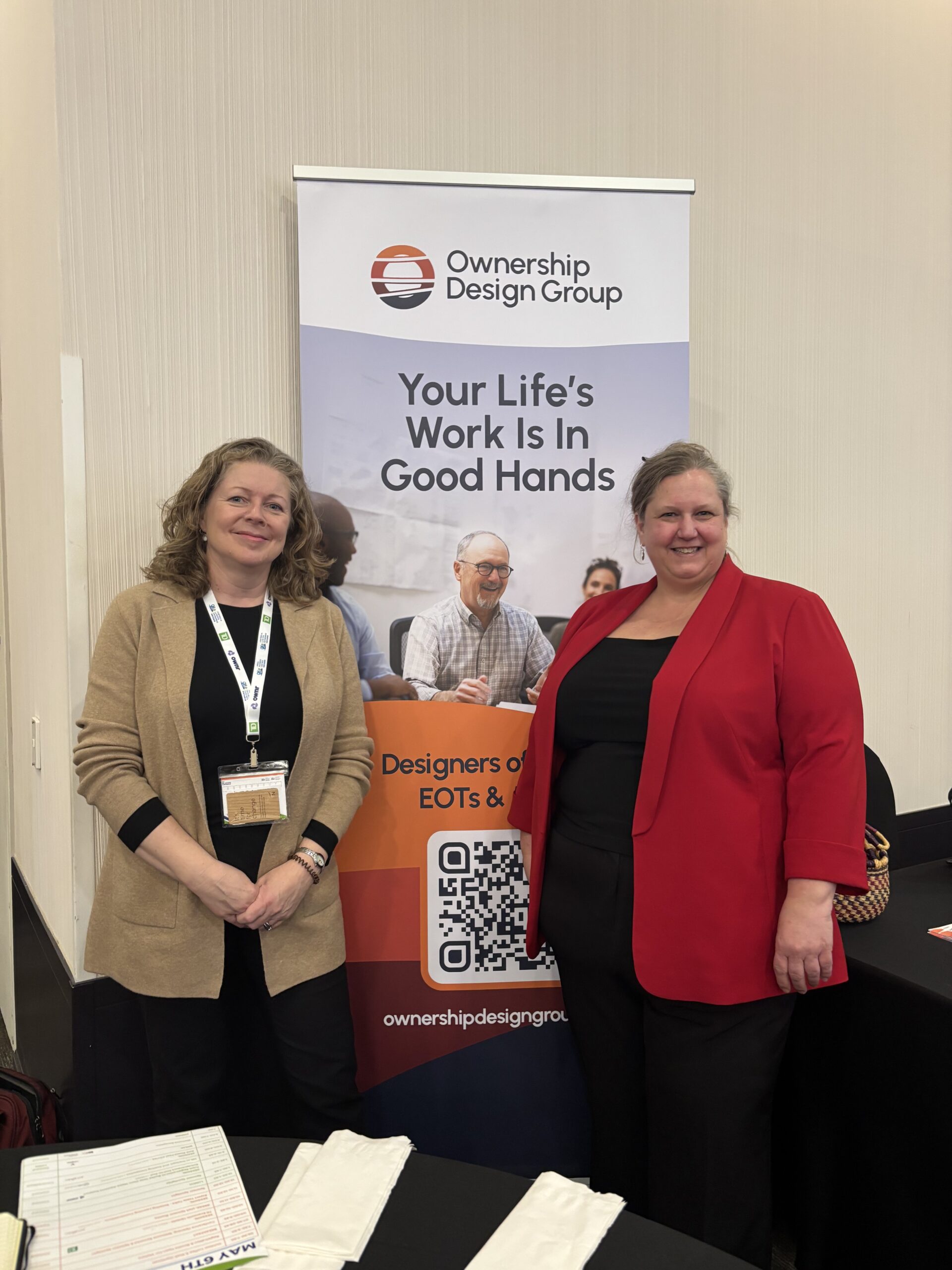
Start today by having a conversation about your transition needs.
EOTs
Answers to Common Questions
Find quick responses to frequently asked questions and get the information you need in no time.
How Does Employee Ownership get funded?
There is no single model. In some cases, employees buy shares directly. In others, a trust or the company itself finances the purchase on their behalf. The structure depends on your goals, the financial capacity of the business and its employees, and how ownership is being transferred.
Some transitions involve employee contributions—others do not. What matters is designing a structure that fits your business and what is realistic for your team.
Is Employee Ownership only for large companies?
Not at all. Employee ownership can work for businesses of many sizes—from independent shops to professional firms. What matters more than size is having a strong team, steady cash flow, and an owner who wants to plan intentionally.
We typically work with companies ranging from 10 to 500 employees—helping them explore options that reflect their goals and capacity.
Why choose Employee Ownership over a third party sale?
A third-party sale often means handing your business over to an outside buyer—someone who may change leadership, restructure the team, or relocate operations. You may have less say in how the transition unfolds, or what happens to the people and culture you have built.
Employee ownership offers a different path. It keeps the business in trusted hands, supports continuity in leadership and operations, and can be structured to reflect your goals, timeline, and values—all while providing fair market value for the company.
What are the tax implications of selling to employees?
Each transition is unique. We work closely with your legal and financial advisors to ensure the sale is tax-effective and compliant. In many cases, employee ownership models can offer favorable tax outcomes for the exiting owner.
How long does the transition process take?
Timelines vary, but most employee ownership transitions take 6–24 months from planning to implementation. We tailor the process to your needs and guide you every step of the way.
Do I need to fully exit the business?
Not necessarily. With employee ownership, you can sell part or all of the company—and stay involved for as long as it makes sense. Some owners continue in their role for years, while others step back gradually or focus on mentoring the next generation. In some cases, employee ownership is used as a growth or retention strategy—not just a succession plan.
It is about designing a transition that fits your goals, your timeline, and the needs of the business.
Employee Ownership Models
Explore Other Options
Feeling like your needs and vision is somewhere in the middle? We also design hybrid approaches tailored to your goals, timeline, and team.
Employee Share Ownership Plans
ESOPs
The most flexible ownership transition structure available to Canadian businesses. We design ESOP programs through share purchase plans, holding companies, or trusts — customized to
your goals, governance preferences, and
timeline.
- Broad-based employee participation
- Customizable vesting & governance
- Phased or full ownership transfer
Management Buyouts
MBOs
When the right successor is already inside the business, an MBO is often the cleanest path to continuity. We structure leadership-led transitions that work for both the departing owner and the incoming management team.
- Leadership continuity preserved
- Vendor financing structures
- Clean, confidential transition
COMBINED MODEL
Hybrid Approach
When no single structure fits, the right answer is often a blend. We design hybrid transitions that combine an EOT with a management buyout, a family succession with an EOT, or other tailored mixes, so the path matches your goals rather than forcing your goals to fit a path.
- Best of more than one model
- Balances family, management & team
- Shaped to your timeline & vision
Which Model is Right for Your Business? Let’s Find Out.
Whether you are in the early stages of exploration or ready to start, let’s begin the conversation.
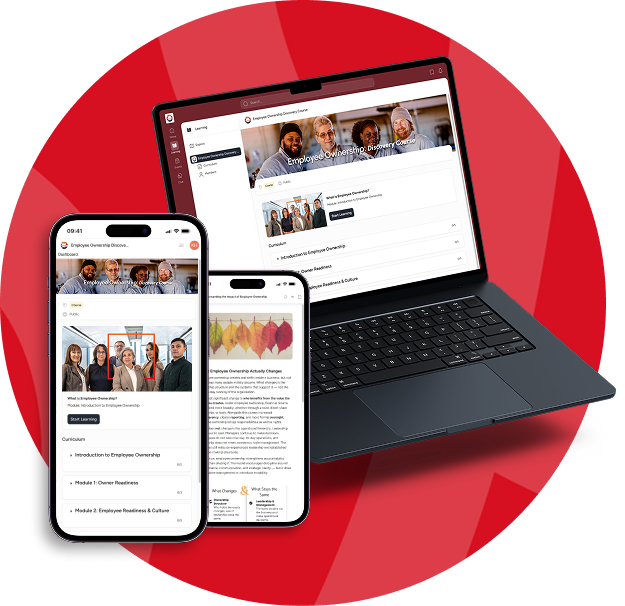
Employee Ownership Course
Want to Learn More At Your Own Pace?
Our Employee Ownership Discovery course is a practical, self-paced introduction to employee ownership in Canada. It breaks down how employee ownership works in practice, the most common structures, and the financial and governance considerations that matter most—so you can explore the option with clarity and confidence, on your schedule.
Let’s Get This Transition Right
Partner with our dedicated team to turn your vision of employee ownership transition into reality.
The Canadian Business Owner’s Guide to Employee Ownership - Digital Download
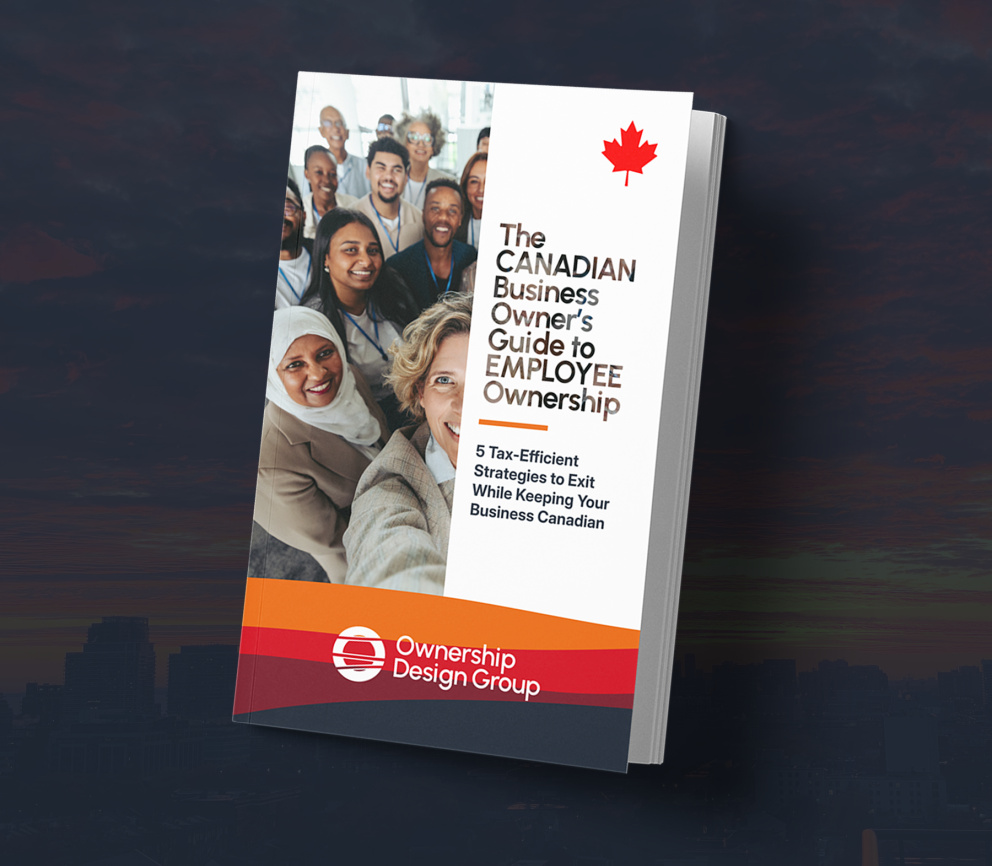
ACCESS YOUR DOWNLOAD HERE
Get Our FREE Canadian Guide Straight to Your Inbox.
Keep an eye on your inbox for your download access —you’ll also get subscribed to our newsletter with more insights and examples of how employee ownership is reshaping Canadian businesses.